
 by
by How Pointy Guitars Shaped Hard Rock: Sean Kelly on the Story Behind Battle Axes
Why did pointy guitars become such powerful symbols of hard rock and heavy metal?
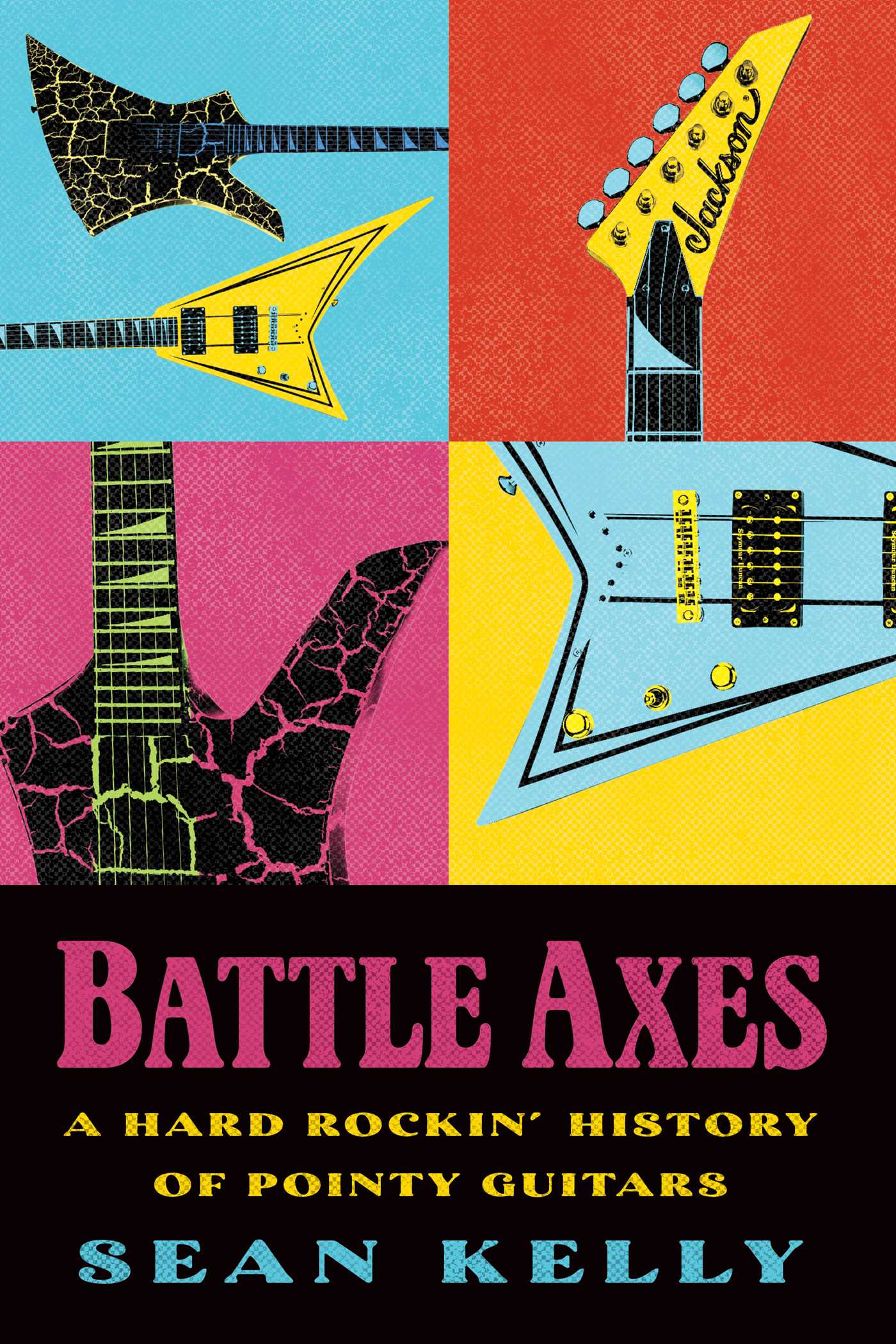
In this episode of Welcome to the Music, host Karim Kanji speaks with guitarist, author, music historian, and educator Sean Kelly about his book, Battle Axes: A Hard Rockin’ History of Pointy Guitars. Their conversation explores the appeal of radical electric-guitar designs, the musicians who made them famous, and the connection between an instrument’s appearance, sound, and cultural impact.
From the Gibson Flying V and Explorer to guitars played by Eddie Van Halen, Rick Emmett, Phil Collen, The Edge, Mick Mars, and Brad Gillis, the interview reveals why these instruments are more than stage props. They can shape an artist’s identity, inspire a performance, and become part of rock history.
What Is a Pointy Guitar?
“Pointy guitar” is an informal term for an electric guitar with a sharp, angular, or futuristic body shape. Familiar examples include the Flying V, Explorer, Dean ML, Ibanez Destroyer, and many of the designs associated with brands such as B.C. Rich, Jackson, Charvel, and ESP.
These guitars are closely connected to hard rock, glam metal, and heavy metal, but Sean explains that their history stretches beyond those genres. Early models emerged from the forward-looking design culture of the 1950s, when the Space Age influenced everything from automobiles to household products.
The guitars looked futuristic, but musicians and consumers were not immediately ready for them.
From Space Age Experiment to Rock Icon
According to Sean, radical guitar designs such as the Flying V and Explorer were initially ahead of their time. Traditional shapes remained more familiar to musicians, while the most angular instruments went through periods of being overlooked and rediscovered.
Players such as Albert King and Lonnie Mack helped keep unconventional guitar designs visible because they valued their sound and playability. By the late 1970s, the rise of arena rock created the perfect environment for instruments designed to command attention.
Then MTV changed the equation again.
Rock music had always been visual, but music videos made a performer’s image more important than ever. A bright, angular guitar could instantly communicate energy, personality, and rebellion. As Sean puts it, a musician does not pick up that kind of instrument to disappear into the background.
Do Pointy Guitars Sound Different?
The conversation begins with an important question: Does changing a guitar’s body shape affect its tone?
Sean says it can. Altering the mass, construction, or design of a guitar may change how the instrument sounds and responds.
He illustrates the point with a story about Eddie Van Halen’s Ibanez Destroyer. Eddie famously cut sections from the instrument to create what became known as the “Shark” guitar. The result looked striking, but Sean explains that the physical changes negatively affected its tone.
It is a perfect example of the balance at the heart of guitar design. Appearance matters, especially in rock, but construction, tone, and playability matter too.
Why Sean Kelly Loves Pointy Guitars
Sean’s interest in these instruments is personal.
As a young guitarist, he wanted a bright B.C. Rich but was encouraged to choose a more traditional-looking instrument. He played familiar designs such as Stratocasters and Les Pauls for years before buying his first Flying V while touring around 2000.
That purchase helped reconnect him with the music and imagery that originally inspired him. Today, pointy guitars remain part of his musical identity, although they do not always fit every performance.
Sean jokes that some artists resist their dramatic appearance. Others embrace it completely. When he performs with the Tenors, for example, he says they encourage him to bring out the brightest and most angular guitar possible—even when the set includes jazz standards, classical material, and “Bohemian Rhapsody.”
The guitar becomes both an instrument and a statement.
The Guitars Behind Famous Rock Music
One of the interview’s recurring themes is the role particular guitars played in memorable albums and performances.
Sean discusses Phil Collen joining Def Leppard and recording with his Ibanez Destroyer during the Pyromania era. He also talks about The Edge using an Explorer during U2’s early years, when the instrument contributed to both his distinctive appearance and the character of his guitar sound.
Rick Emmett is another key figure in the conversation. Sean describes the return of the Flying V in Triumph’s live presentation and notes how its shape remains connected to the band’s classic visual identity.
These stories demonstrate how a guitar can become part of a musician’s public image. Fans may remember the song and the player, but they often remember the instrument too.
Solving the Mystery of Mick Mars’ Guitar
One of Sean’s most memorable research stories involves a mysterious guitar held by Mick Mars on the back cover of Mötley Crüe’s Too Fast for Love.
Sean had wondered about the instrument for years. He knew it did not match the guitars most commonly associated with Mars, but he could not identify its origin.
A brief comment in a documentary about Charvel guitars eventually gave him a lead. Sean tracked down builder Dave Jellison and learned more about the guitar’s journey. The instrument had reportedly been used by Mötley Crüe but was not purchased by the band. It later returned to the San Francisco Bay Area and was acquired by another musician Sean interviewed.
For Sean, uncovering that history was like solving a long-running mystery. It also showed how an individual guitar can develop a story of its own as it moves between builders, players, stores, studios, photographs, and stages.
Is the Magic in the Guitar or the Guitarist?
Collectors sometimes pay extraordinary amounts for instruments previously owned or played by famous musicians. Sean understands the appeal, but his own experience led him to a different conclusion.
While opening for Night Ranger, he had an opportunity to play one of Brad Gillis’s guitars—the Strat associated with Gillis’s work with Ozzy Osbourne. Sean appreciated the instrument and its history, but he did not feel compelled to own it.
The experience reminded him that the musician creates the magic.
A famous guitar can be meaningful, inspiring, and historically important. But without the individual player’s technique, choices, personality, and imagination, it is still an instrument waiting to be played.
Guitar Acquisition Syndrome and the Thrill of Collecting
The interview also touches on “Guitar Acquisition Syndrome,” often shortened to GAS—the persistent desire among musicians to acquire another guitar.
Sean describes the anticipation of waiting for a new instrument as part of the excitement. Guitars can also function as visual art. Seeing a distinctive instrument on the wall may spark a musical idea before it is even plugged in.
His own collection includes guitars connected to different periods, sounds, and personal experiences. Each one encourages him to play differently.
That helps explain why musicians continue collecting even when they already own enough instruments to perform their work. The attraction is not purely practical. A guitar can evoke nostalgia, suggest a sound, inspire a song, or reconnect a player with the reason they started making music.
Pointy Guitars Are Inspiring a New Generation
Sean also teaches instrumental and vocal music to students in Grades 7 and 8. Alongside traditional concert-band instruction, he leads a school rock band.
Some students arrive with Jackson guitars, Floyd Rose locking tremolo systems, and an enthusiasm for the sounds and visual style associated with hard rock. For Sean, seeing younger musicians embrace that culture is proof that the pointy guitar remains relevant.
The instrument may be strongly associated with the 1970s and 1980s, but its appeal has not disappeared. It still offers young performers the same things it offered earlier generations: individuality, excitement, and the feeling of stepping into a larger-than-life role onstage.
Why Pointy Guitars Still Matter
Pointy guitars endure because they combine music, visual design, nostalgia, and identity.
Their shapes reflect the optimism of the Space Age. Their popularity is tied to the rise of arena rock, music videos, glam metal, and heavy metal. Their histories intersect with some of rock’s most recognizable musicians. Most importantly, they continue to inspire people to pick up a guitar and play.
Sean Kelly’s conversation with Karim Kanji shows that the history of the pointy guitar is ultimately a history of musical creativity. The designs may attract attention first, but it is the connection between instrument and player that gives them lasting meaning.
Listen to the full episode of Welcome to the Music to hear more from Sean Kelly about Battle Axes, his guitar collection, his research, and the iconic instruments that helped shape rock history.
Frequently Asked Questions
What is Sean Kelly’s Battle Axes about?
In the interview, Sean describes Battle Axes: A Hard Rockin’ History of Pointy Guitars as a history of angular and futuristic electric guitars, the people who created them, and the musicians who brought them into rock culture.
Why are pointy guitars associated with heavy metal?
Their dramatic shapes were well suited to the visual spectacle of arena rock, MTV, glam metal, and 1980s heavy metal. They helped performers stand out onstage and in music videos.
Which guitarists are discussed in the interview?
The conversation includes stories involving Eddie Van Halen, Rick Emmett, Phil Collen, The Edge, Mick Mars, Brad Gillis, Michael Schenker, K.K. Downing, Albert King, and Lonnie Mack.
Does guitar shape affect tone?
Sean explains that a guitar’s body mass and construction can influence its tone. Significant physical modifications may therefore change how an instrument sounds.
Why do musicians collect so many guitars?
Different instruments can inspire different sounds, playing styles, memories, and creative ideas. For many players, guitars are also works of art and symbols of musical history.